06 / UC Climate Resilience Initiative · UCSF
Start Where You Are
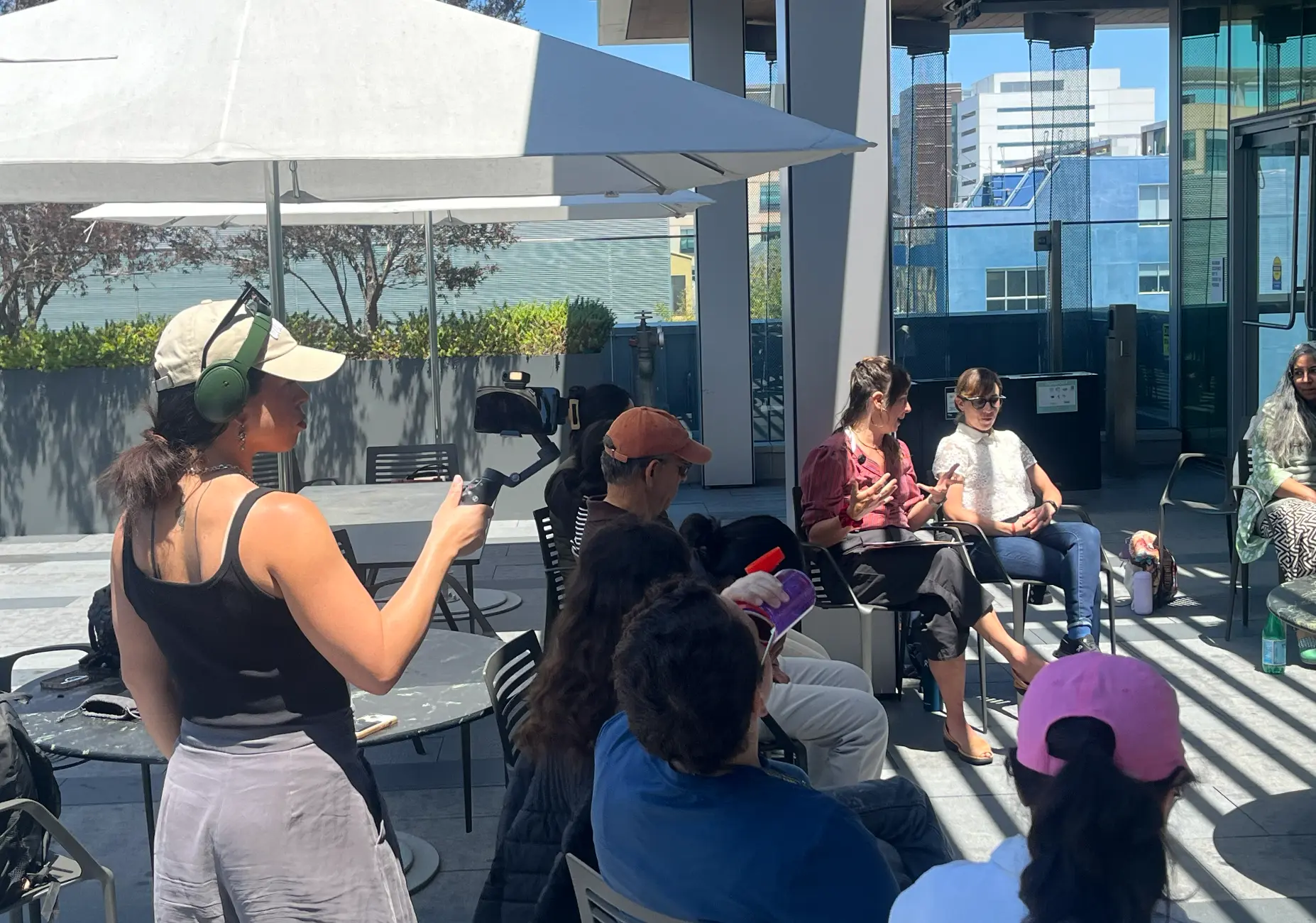
I direct, produce, and shoot a docu-series for the UC Climate Resilience course, showing how students and experts turn climate anxiety into action.
- My role
- Director · Producer · Cinematographer
- Collaborators
- Dr. Elissa Epel (UCSF), course faculty, students and experts
- Focus
- Docu-Series · Social Content Strategy · Climate Mental Health
A mini-doc that helped raise funds to grow the course across the UC system.
Also featured on the UC Climate Resilience site →01 / The challenge
Meeting the polycrisis with resilience
Climate anxiety is rising: 85% of U.S. youth are worried about climate change, and nearly 4 in 10 say it interferes with their daily lives.*
The UC Climate Resilience course teaches practical, science-based skills across all 10 UC campuses. We used research like this to tell the story of students and teachers working together, showing how education on eco-anxiety can build resilience. The films met students where they already are: on campus and online.
*Source: Lancet Planetary Health, 2024 (survey of ~16,000 U.S. youth ages 16–25).
02 / What I did
What I did
- 01
Story development
I identified and interviewed students, researchers, and practitioners whose stories showed resilience in action.
- 02
Direction & production
I directed, shot, and produced each episode, from interviews to final cut.
- 03
Content strategy
I built a full copy pipeline for every release: YouTube descriptions, Instagram captions with clear calls to action, series descriptions, and voiceover scripts.
- 04
Range of topics
Episodes covered climate anxiety, AI data centers and community health, and student-led resilience.
03 / Outcome
What came out of it
- 3 mini-docs used for fundraising
- 10+ social videos used to recruit students across the UC system
- A full content package for every release: video, captions, descriptions, and voiceover
More from the series
Episode 1
Climate cafés with Golden Gate National Parks Conservancy, turning climate anxiety into community connection.
Read Episode 1 transcript
Automatically transcribed from the film’s audio; names and wording may contain errors.
So, my name is Nick Patnod. I work at Benioff Children's Hospital, which is part of UCSF. So what attracted me to taking the climate resilience class was that I was feeling isolated in my own life and experience with climate change and what I later learned was the polycrisis.
Our group project was bringing together resources from the National Parks Conservancy and UCSF, bringing them together to create a really unique experience for people to talk about climate, their anxieties, and ways in which they can move through that. This project would not have been possible without the support of the Golden Gate National Parks Conservancy.
Communities don't experience climate change as data or graphs. They experience it with their heart.
They provided us a free space. They provided us with amazing facilitators to take folks through Grissy Fields Marsh, and they had amazing facilities for us to break up into small groups to perform our climate cafe.
We all have different complex emotions surrounding this topic. People go from the anger side of the emotion wheel to something more positive and an outlook that gives them hope.
The climate cafe model allows people to express themselves, share in community what they're feeling and come back out the other end of it with some sense of community and hope and action.
I think I came in feeling angry and still feeling that anger, but feeling a lot more hope, gratitude.
So I will say before this class, I didn't know what to do or what my role was in all of this polycrisis. And through this class, I was really able to calm my nervous system and then take specific action to produce something that had meaning and impact beyond myself.
The future of this work is going to continue and live on. These climate cafe events are for everyone. If you have feelings about the climate, you should come join our event.
What we've learned is that resilient communities are communities that come together and take action.
Episode 2
Students turn research into action, taking the health impacts of AI data centers to public comment.
Read Episode 2 transcript
Automatically transcribed from the film’s audio; names and wording may contain errors.
It clicked for me that AI data centers were an issue regarding climate change within the past six months, AI data centers being placed in poor communities, and the social and economic and environmental impact that it is already having in communities around the U.S.
I was thinking the first thing we should do is we should describe what AI data, I think a lot of people even know what AI data centers look like, what else, if there's disparities in location.
I kind of want to get into like the impacts, so there are a lot of indirect health impacts as a result of the environmental impacts that might happen to these people around these data centers. Air pollution leads to a lot of respiratory and heart conditions, noise pollution, sleep disturbances.
I think it's good now to start to get people educated, informed, and take some action. I mean it's alarming. I can see why a lot of people feel like there's nothing they can do.
Having a handle around my negative feelings around this issue has allowed me to start thinking through possible solutions.
We're just doing our team meeting for the climate presentation.
But how would it look if we knew how to meet ecological anxiety with action and with connection? Just that sense of not being alone, of course, in our collective, but also not being alone in this ongoing living stream of life on this planet.
What keeps me grounded is the realization that we as a people have more power than we actually recognize. And also witnessing communities mobilize across the nation and push back has been inspiring to me.
Let's go to public comment.
Hello, everyone. I'm here to inform and ask for a budget to be set aside for research on the environmental and health impacts of data centers, as well as the best policies to mitigate these impacts, disclosure of proposed data centers, billing the companies, not the communities, and more public discussions around this. Thank you.
One thing I would say to someone who wants to get involved in climate work is assess your strengths, figure out what you're good at, and use those skills to make a difference.
Next project
Stress and Resilience Study